
I used to be a hockey player growing up.
I remember my first hockey practice EVER. It is a moment that will stay with me because it was so traumatic. First of all, my parents accidentally signed me up to try out for the best team in the league – and I had barely been on skates before! All the kids were doing tricks and skating laps around me.
But then the worst moment came – the scrimmage. I didn’t know the plays, I didn’t know a lot of the rules, I didn’t know how to do really anything.
One person passed me the puck, and I froze. I didn’t know what to do with it! I sat there, on the ice, staring at this little round circle at the end of my stick. And because I didn’t know what to do with it, I looked up and instantly got checked extremely hard by the other team.
Have y’all had something in your life that you didn’t know what to do with?
Perhaps you were just handed an additional assignment at work. Maybe you got assigned a ten page paper.
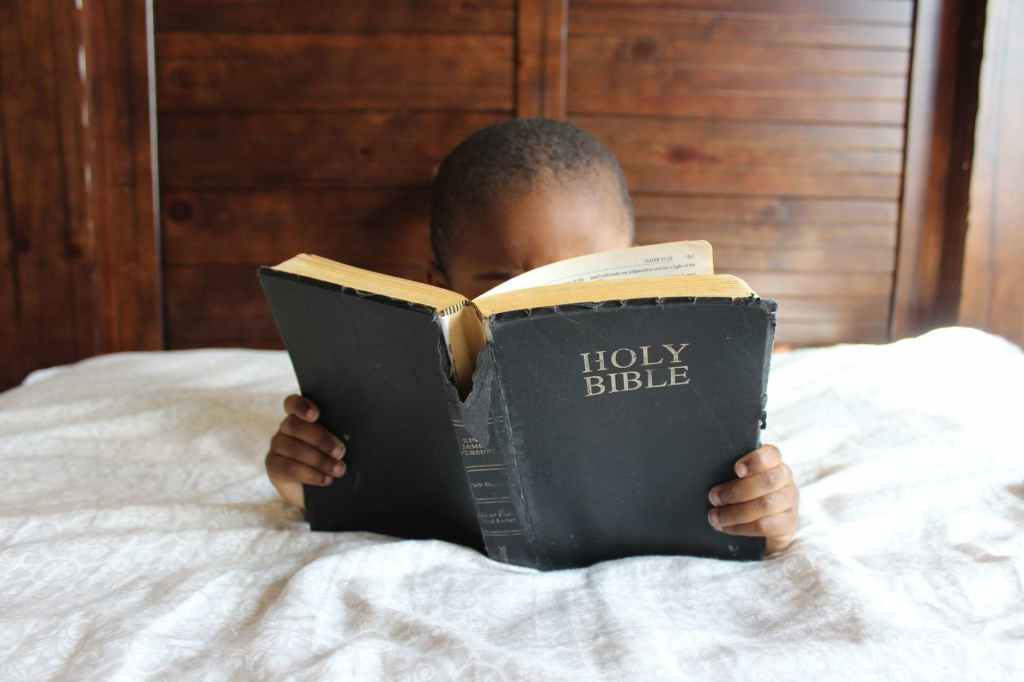
A lot of us approach the Bible this way. We come to church and we are handed the Bible. Maybe as a kid, you went to sleep at night and your parents told you to open the Bible. Maybe you’ve grown up through Children’s ministry and you’ve learned all about the Bible.
Related Book: Making Sense of the Bible: Rediscovering the Power of Scripture Today by Adam Hamilton
But what do we DO with it? Why is this book even important?
- The Bible is God revealing himself to us.
The Bible is not like any book ever written – first of all, it’s not even one book. The Bible is a library of 66 different books, written by over 40 authors, over a span of 1500 (give or take a few) years.
This book is awesome and divine. Between all of the authors and the great time span, there are zero contradictions or mistakes in the original language. I know you might disagree with the contradictions part – see number 2 in this post.
Every word in the Bible is inspired by God and written through human beings, to give us an understanding about who God is. He shows us this in a few ways. First, through the narrative of Scripture. All 66 books tell the same story: Jesus is the salvation of the world.
The Old Testament shows the journey of the Israelites’ relationship with God’s law and how they ultimately could not live up to the standard. Many stories in the Old Testament show parts of God’s character, both his love and his wrath.
The New Testament shows how Jesus fulfills the need for a perfectly lived sacrifice in order to save humanity and bring us back into relationship with God the Father. The New Testament also teaches us (today) how to live a Christian life, what the church should look like, and how we practically teach Jesus to other people.
- The Bible is a history book – it really happened!
Back to the contradictions part. Remember when I said the Bible was written by humans? Well, humans all have a unique personality. The author’s of the Bible are no different.
With their own personalities showing, each story is told in a slightly different way. The gospels, for example, are all about the same life of Jesus… why do we need four of them? And why is John’s so different? All four gospel writers are telling the life of Jesus through their own stories and events that happened. Some authors chose to include certain information while others left some out. Some chose to be more detail-oriented while others just wanted the themes. They decided (through the Holy Spirit) what to include in their gospel that would make sense for their specific audiences and themes.
That’s right – specific audiences. The Bible, I hate to break it to you, was not written directly to you. That means that “I can do all things through Christ” does not apply directly to your gym bench max. The Bible is history, and it carries a specific context.
Each author of each individual book wrote to a specific group of people with an intended purpose. The Bible is super important for the Christian faith because it tells the story of the church, how it should continue to operate, and it gives us lessons from previous disciples of Jesus for what to do and not to do in order to follow Christ.
As readers of the Bible, we must be knowledgeable of the historical context, the literary themes used, and the intended purpose BEFORE we begin to apply things to our lives.
- The Bible is alive and it will change your life.
The Bible tells us about the God of the universe – that is pretty sweet that we can know a little bit about who he is.
The Bible also tells us about history, the events that took place centuries before we were born.
Finally, the Bible has the power to change your life. It is still completely and totally relevant today!
How can a book that is thousands of years old be relevant today? I already know that you know that the Bible STILL ranks among the top books sold every year. So, we will look inside the Bible at its answer to how it remains relevant:
Hebrews 4:12 “For the word of God is alive and active. Sharper than any double-edged sword, it penetrates even to divide soul and spirit, joints and marrow; it judges the thoughts and attitudes of the heart.“
If you are a Christian, the Holy Spirit illuminates the Bible to show you deeper insights from it then you can imagine. It will cut deep to your heart, unlike any book, podcast, or tv show can.
If you are not a Christian, you may find it to be convicting you to – calling you out for the wrongdoings in your life. That is the Spirit telling you that the Bible shows us what is best for us and it leads us into the presence of the living God.
Believe what you read when you read the Bible. It is historically true, culturally relevant, and inspired by God himself. It is able to teach you how to live, comfort you when you are sad, and direct you when you are lost.
The Bible is important. I hope that you begin a journey to reading it every day!
Related Blogs:

 Missionary Sports